Posted on Leave a comment

20 Best Bookkeeping Services in Los Angeles, CA

Bookkeeping Services in Los Angeles

Mooneem is a full-service tax and bookkeeping firm located in Los Angeles that offers bookkeeping, payroll, tax, accounts receivable, and accounts payable management. Other services include reporting, inventory management, and CPA solutions. Mooneem provides accurate and consistent bookkeeping assistance throughout the year. Located in Burbank, Bookkeepers normal balance Pro is a full-service bookkeeping firm possessing over 20 years of experience in the industry. Services provided include accounts receivable, accounts payable, reconciliations, payroll processing, reports per request, and other bookkeeping assistance. Our CPAs lead a team of small business accountants, tax preparers, and degreed accountants in our two offices in Beverly Hills, CA and Encino, CA.

Why choose this provider?

Atlantic Tax Service provides opportunities to outsource your bookkeeping tasks. With a combined 92 years of executive advisory experience, you can expect the best service from this company. Providence Accounting Group can develop strategies to assist you in funding your business. The company works with different industries, including independent contractors, constructor workers, models, and actors.

A FEW OF OUR LA CLIENTS
Bookkeeping Services in Los Angeles

John W. Weldon, CPA, provides IRS problem resolution services for individuals and businesses. In addition, you can access various tax solutions to minimize your tax and save more money. From 1099s to W-4 and W-9, the firm also can help you file important documents. TaxPlus is an awarding-winning firm providing excellent bookkeeping services in the Los Angeles area. The company has a highly-qualified staff with vast experience in the tax field. Each client working with TaxPlus enjoys individual attention and personalized services.

Atlantic Tax Services

Let Milestone handle the complexities, enabling you to focus on strategic expansion. We don’t just plug in software – we help you get the most from it. As trusted partners of Xero, QBO, Gusto, and more, we deliver smarter Los Angeles bookkeeping services that bring automation, clarity, and control to your day-to-day. With each and every one of our services, you’ll always know what you’re paying for. We offer flexible, transparent solutions designed around your business’s needs – no hidden fees, just real value.

Bookkeeping To Taxes All under one roof

The staff members are equally friendly and strive to develop a good business relationship with clients. Plus, you will get complimentary refreshments whenever you visit Fast Tax Services’ office. As a result, you can enjoy quality service as you would with a CPA while saving overhead expenses. Also, the provided services are customizable to match your specific needs.

  • By entrusting your bookkeeping to professionals, you can redirect your focus towards growing your business.
  • Services for individuals include personal budgeting, tax preparation, and bookkeeping.
  • Whether you are in the manufacturing, retail, or wholesale business – we help you implement best practices to manage your accounts receivable and accounts payable.
  • Milestone simplifies this journey with expert bookkeeping, meticulous tax preparation, and seamless filing services, ensuring your business is optimally positioned for enduring success.
  • If you need assistance organizing your books, you can partner with one of these reliable bookkeeping services in the city.
  • You’ll leave with a clear understanding of how we work—and how we can help your business today.
  • Entry-level bookkeepers charge on the lower end, while certified public accountants, accountants, or those with QuickBooks or CPA credentials command higher fees.

Bookkeeping Services in Los Angeles

Our accounting services aren’t just about staying compliant – they’re about unlocking what your numbers are really telling you. As part of our advanced advisory support, we help you move from keeping up to planning ahead, using your financials as a tool for growth. Bookkeeping doesn’t have to be a headache – especially when you’ve got the right tools and team. At Acuity, our bookkeeping Los Angeles team pairs financial know-how with top-tier software to help your business run more smoothly. With trusted platforms like Xero, QuickBooks Online, and Gusto, we bring accuracy, automation, and clear insight to your finances.

  • The type of accounting firm you choose can make a real difference in the success of your small business.
  • TaxPlus adapts a confidential and secure system so that you can trust your books and personal tax information in the firm’s hands.
  • We help you stay one step ahead—handling the books, tracking expenses, and staying compliant with California’s ever changing rules so that you can focus on growth.
  • John W. Weldon CPA is a Los Angeles CPA firm dedicated to providing superior, personalized tax and accounting services.
  • Our goal is to provide a seamless, hassle-free experience, ensuring your bookkeeping Los Angeles needs are managed efficiently and meet all compliance requirements.
  • Find out how we can assist with all of your accounting and tax needs.
  • Milestone reimagines bookkeeping as a strategic asset, providing Los Angeles entrepreneurs with a comprehensive view of their financial health.
  • Don’t do your own books, outsource them and free up your time to do what you love and what you do best.
  • Omar Tolentino’s bookkeeping firm boasts 25 years of experience in the field and has served over 10,000 happy clients.
  • Our team delivers the strategic insights needed to accelerate and scale your growth.
  • Our team blends technology with personalized support, giving Los Angeles businesses clarity and confidence in their numbers.
  • Los Angeles bookkeeping rates trend higher due to the city’s cost of living, competition for talent, and high service demand.

You can access your reports and data from wherever you are.– Essential features. QuickBooks Online and Xero are equipped with key features to simplify bookkeeping services los angeles and manage your bookkeeping and grow your business. They will keep you tax-ready all year long.– You own the software.

Bookkeeping Services in Los Angeles

Bookkeeping Los Angeles, CA near me

Bookkeeping Services in Los Angeles

If you’re looking for effective tax planning strategies and worry-free tax preparation at tax time, choosing an Enrolled Agent is your best bet. We align your books with Statement of Comprehensive Income local regulations and ensure you’re always ready for tax season. There will be no stress or surprises—just a clean, compliant record every month.
Posted on Leave a comment

Double-declining Depreciation Method in Accounting

double declining method

But I do recommend working with your CPA or financial advisor to set-up depreciation schedules for any new assets your business may acquire. The chart also shows which depreciation method was used to calculate the depreciation expense, and the book value of the asset each year. A tailored tax strategy, informed by CPAs and tax professionals with industry-specific experience, ensures the chosen depreciation method aligns with both asset type and business model. To calculate the depreciation rate for the DDB method, typically, you double the straight-line depreciation rate.

Microsoft® Excel® Functions Equivalent: DDB

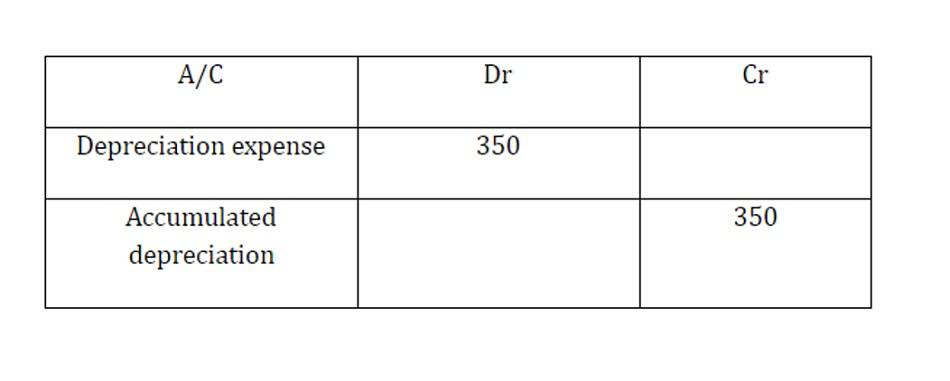
Each year, you depreciate double declining method the asset by a fraction that has the remaining life of the asset as the numerator. The best way to explain the double-declining method of depreciation is to look at some simple examples. Through them I’ll show you which accounts and journal entries are required, and how to switch depreciation method in the middle of an asset’s life in order to fully depreciate the asset. Business owners do not want to worry about depreciation schedules and various depreciation methods. As an accountant, one should be comfortable with all methods of depreciation.

Units-of-Production Depletion Formula

By prioritizing higher depreciation in the early years, it aligns financial records with real-world asset usage and delivers multiple benefits. DDB works by doubling the depreciation rate used in the straight-line method. For instance, if the straight-line rate for a five-year asset is 20%, the DDB method applies a 40% rate in the first year. This accelerated approach better matches the real-world decline in an asset’s value, especially for items that lose their utility faster. There are various alternative methods that can be used for calculating a company’s annual depreciation expense.

  • Vehicles fall under the five-year property class according to the Internal Revenue Service (IRS).
  • DDB differs from the straight-line method as it accelerates depreciation, allowing larger expenses in the earlier years and smaller ones as the asset ages.
  • In that year, the depreciation amount will be the difference between the asset’s book value at the beginning of the year and its final salvage value (usually a small remainder).
  • From this example it is obvious, that over the 5 years useful life of the asset in the beginning depreciation is much higher comparing to later years.

Is double declining balance GAAP approved?

This may be true with certain computer equipment, mobile devices, and other high-tech items, which are generally useful earlier on but become less so as newer models are brought to market. Units of production (UOP) depreciation is best for assets that will be used on an irregular basis throughout their lives. Notice once again that the ending book value of the delivery truck, $6,000, equals its residual value, as it did with SL depreciation.

double declining method

The DDB depreciation method is best applied to assets that lose value quickly in the first few years of ownership, such as cars and other vehicles. However, it may also apply to business assets like computers, mobile devices and other electronics. For example, if an asset has a salvage value of $8000 and is valued in the books at $10,000 at the start of its last accounting year. In the final year, the asset will be further depreciated by $2000, ignoring the rate of depreciation. In the accounting period in which an asset is acquired, the depreciation expense calculation needs to account for the fact that the asset has been available only for a part of the period (partial year). The following section explains the step-by-step process for calculating the depreciation expense in the first year, mid-years, and the asset’s final year.

Declining Balance Method Example

  • The double-declining balance method aligns asset depreciation with revenue generation, providing significant tax benefits and a realistic reflection of asset value.
  • One way of accelerating the depreciation expense is the double decline depreciation method.
  • This method is simpler and more conservative in its approach, as it does not account for the front-loaded wear and tear that some assets may experience.
  • When it comes to taxes, this approach can help your business reduce its tax liability during the crucial early years of asset ownership.
  • Since it always charges a percentage on the base value, there will always be leftovers.
  • Under the double-declining balance method, accumulated depreciation accumulates more rapidly in the early years of an asset’s life, reflecting accelerated depreciation.

To calculate it, you take the asset’s starting value, find its useful life, and then multiply the starting value by double the straight-line rate. Using the steps outlined above, let’s walk through an example of how to build a table that calculates the full depreciation schedule over the life of the asset. At the beginning of the first year, the fixture’s book value is $100,000 since the fixtures have not yet had any depreciation. Therefore, under the double declining balance method the $100,000 of book value will be multiplied by 20% and will result in $20,000 of depreciation for Year 1.

  • So, depreciation refers to the “using up” of a fixed asset and to the process of allocating the asset’s cost to expense over the asset’s useful life.
  • Your basic depreciation rate is the rate at which an asset depreciates using the straight line method.
  • The Double Declining Balance Method, often referred to as the DDB method, is a commonly used accounting technique to calculate the depreciation of an asset.
  • Each year, apply this rate to the remaining undepreciated balance of the asset.
  • Sara wants to know the amounts of depreciation expense and asset value she needs to show in her financial statements prepared on 31 December each year if the double-declining method is used.

Declining Balance Method of Depreciation Explained in Video

This results in depreciation being the highest in the first year of ownership and declining over time. Hence, our calculation of the depreciation expense in Year 5 – the final year of our fixed asset’s useful life – differs from the prior periods. Bottom line—calculating depreciation with the double declining balance method is more complicated than using straight line depreciation. And if it’s your first time filing with this method, you may want to talk to an accountant to make sure you don’t make any costly mistakes. On the other hand, with the double declining balance depreciation method, you write off a large depreciation expense in the early years, right after you’ve purchased an asset, and less each year after that. With the double declining balance method, you depreciate less and less of an asset’s value over time.

double declining method

When you purchase an asset that you expect to use in your business for more than one year, financial accounting principles require you to depreciate, or expense, part of the cost over a number of years. In certain cases businesses do use double declining balance method of depreciation to attribute cost of property, plant and equipment to expenses. DDD is so named because the annual assets = liabilities + equity depreciation rate is exactly double the standard straight-line rate.

double declining method

Double declining balance depreciation allows for higher depreciation expenses in early years and lower expenses as an asset nears the end of its life. Depreciation is the required accounting process of systematically allocating the cost of a tangible asset over its estimated useful life. This cost allocation is not a cash expense but rather a mechanism for matching the asset’s expense with the revenue it generates over its service period. The Double Declining Balance (DDB) method is one specific, accelerated approach to this allocation. Firstly, the DDB method influences the income statement by spreading the depreciation expense over the asset’s useful life.

Comparison of MACRS and Double Declining Balance Methods

double declining method

Many types of property—like vehicles, computers and manufacturing equipment—decline faster in the early years. Not only does DDB align with this reality, but it can also help generate savings during growth phases by maximizing deductions. Suppose you purchase an asset for your business for $575,000 and you expect it to have a life of 10 years with a final salvage value of $5,000. You also want less than 200% of Partnership Accounting the straight-line depreciation (double-declining) at 150% or a factor of 1.5. There are four different depreciation methods used today, and I discuss these in the last section of my Beginner’s Guide to Depreciation. The above image doesn’t a much better job of explaining switching depreciation methods than mere words alone.

Posted on Leave a comment

20+ Best Bookkeeping Software for Businesses 2025 Tool Guide

bookkeeping for business

You can teach yourself bookkeeping in different ways (this guide gives you a solid start). Additionally, online courses (check Coursera and Udemy), workshops, and even free tutorials can equip you with the knowledge you need. You can also use bookkeeping softwares like QuickBooks, Xero, or FreshBooks to get hands-on experience. “Overlooking bank fees and inaccurate record-keeping” are also frequent pitfalls, Schmied says. Answer some questions about Bookkeeping for Startups your small business and we’ll pair you with customized software options.

  • Be sure that when starting a bookkeeping business with QuickBooks, you use QuickBooks Online; not QuickBooks Desktop.
  • Accounting software also generates financial reports for you, which is a crucial part of creating a small business that many first-time business owners aren’t aware of.
  • Xero’s entry-level Early plan caps the number of invoices you can send and approve at 20 and the number of bills you can enter at five, which makes it impractical for most small businesses.
  • The ability to go above and beyond virtual bookkeeping is crucial if you want to become a great bookkeeper and earn a great living.

Bookkeeping mistakes small businesses should avoid

bookkeeping for business

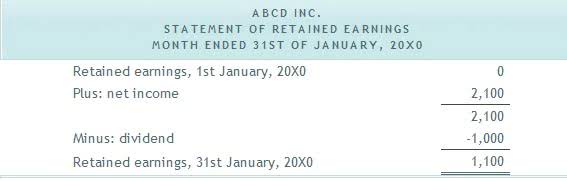
Bookkeeping is the act of recording your daily business transactions. You’ll need to record the money going out as well as the money coming in. Pay particular attention to your petty cash and remember to reconcile your accounts at least once a month. Regularly reviewing your profit and loss statements keeps you informed about cash flow trends, while proactive planning ensures long-term stability. Even small changes—like digitizing receipts or setting up automated payments—can make a big impact over time. By implementing these habits, you can maintain accurate financial records, improve cash flow management, and avoid costly mistakes.

Online Bookkeeping Method

bookkeeping for business

If you find someone who is a good fit for your business needs, it doesn’t matter if they are in California while you work from New York. You’ll want to create a contract that outlines details, such as deadlines, rates and expectations so that everyone is on the same page. While they seem similar at first glance, bookkeeping and accounting are two very different mediums. Bookkeeping serves as more of a preliminary function through the straightforward recording and organizing of financial information. Accounting takes that information and expands on it through analyzing and interpreting the data.

  • Bookkeeping should ideally be done regularly to ensure that financial records are up-to-date and accurate.
  • Continue reading to discover why small business accounting is important, as well as how to streamline your business’s finances.
  • To prevent this confusion, consider setting up dedicated business bank accounts or using a separate business credit card for all business transactions.
  • This process helps identify errors, prevent fraud, and maintain accurate financial statements.
  • Its live Q&A chat lets you ask an expert financial questions during business hours, and you can always schedule an appointment with a Sage Accounting expert.
  • No matter the payment method used, each transaction must be recorded with the date, amount, and purpose.

Set up your accounting software or spreadsheet

bookkeeping for business

Consulting part-time with a small-business bookkeeper or accountant can work nicely for newer, smaller businesses. But once your business is big enough that you can’t (or simply don’t want to) wrangle finances by yourself, it’s probably time to get a bookkeeper or CPA on your payroll. You can learn a lot about how to do accounting for small businesses just from browsing the internet. But nothing beats up-front, personalized advice from a certified professional—in this case, a bookkeeper, accountant, or CPA.

Comparing your expected vs. actual income and expenses can help you spot issues early on bookkeeping for business and give context to your cash flow statement. Track what comes in, what goes out, and keep your books organized without the usual hassle.Ready to stop stressing and start owning your finances? Your income statement (aka a profit and loss statement) adds up everything you earned and everything you spent. Say you invoiced $2,500 for a branding project and spent $300 on tools and coworking. That leaves $2,200 in your pocket (net income).This report shows what you actually made—and it’s the one the CRA pays attention to at tax time.

bookkeeping for business

setTimeout(function()

  • Some companies may use an accountant or the services of an accounting firm only to do taxes.
  • A strong balance sheet indicates financial stability, while a high level of liabilities compared to assets may signal potential financial risk.
  • If possible, you should keep them in both paper and digital formats.
  • Enrol in business accounting classes to learn more about accounting skills.

It doesn’t record invoices or your company’s outstanding bills until you’ve been paid them. This simple rule prevents legal issues and simplifies bookkeeping significantly. Follow this systematic approach to handle https://www.bookstime.com/ small business bookkeeping effectively and maintain accurate financial records. Every time money moves, you log it in your “books”, which could be a spreadsheet, ledger, or accounting software.