But I do recommend working with your CPA or financial advisor to set-up depreciation schedules for any new assets your business may acquire. The chart also shows which depreciation method was used to calculate the depreciation expense, and the book value of the asset each year. A tailored tax strategy, informed by CPAs and tax professionals with industry-specific experience, ensures the chosen depreciation method aligns with both asset type and business model. To calculate the depreciation rate for the DDB method, typically, you double the straight-line depreciation rate.
Microsoft® Excel® Functions Equivalent: DDB
Each year, you depreciate double declining method the asset by a fraction that has the remaining life of the asset as the numerator. The best way to explain the double-declining method of depreciation is to look at some simple examples. Through them I’ll show you which accounts and journal entries are required, and how to switch depreciation method in the middle of an asset’s life in order to fully depreciate the asset. Business owners do not want to worry about depreciation schedules and various depreciation methods. As an accountant, one should be comfortable with all methods of depreciation.
Units-of-Production Depletion Formula
By prioritizing higher depreciation in the early years, it aligns financial records with real-world asset usage and delivers multiple benefits. DDB works by doubling the depreciation rate used in the straight-line method. For instance, if the straight-line rate for a five-year asset is 20%, the DDB method applies a 40% rate in the first year. This accelerated approach better matches the real-world decline in an asset’s value, especially for items that lose their utility faster. There are various alternative methods that can be used for calculating a company’s annual depreciation expense.
- Vehicles fall under the five-year property class according to the Internal Revenue Service (IRS).
- DDB differs from the straight-line method as it accelerates depreciation, allowing larger expenses in the earlier years and smaller ones as the asset ages.
- In that year, the depreciation amount will be the difference between the asset’s book value at the beginning of the year and its final salvage value (usually a small remainder).
- From this example it is obvious, that over the 5 years useful life of the asset in the beginning depreciation is much higher comparing to later years.
Is double declining balance GAAP approved?
This may be true with certain computer equipment, mobile devices, and other high-tech items, which are generally useful earlier on but become less so as newer models are brought to market. Units of production (UOP) depreciation is best for assets that will be used on an irregular basis throughout their lives. Notice once again that the ending book value of the delivery truck, $6,000, equals its residual value, as it did with SL depreciation.
The DDB depreciation method is best applied to assets that lose value quickly in the first few years of ownership, such as cars and other vehicles. However, it may also apply to business assets like computers, mobile devices and other electronics. For example, if an asset has a salvage value of $8000 and is valued in the books at $10,000 at the start of its last accounting year. In the final year, the asset will be further depreciated by $2000, ignoring the rate of depreciation. In the accounting period in which an asset is acquired, the depreciation expense calculation needs to account for the fact that the asset has been available only for a part of the period (partial year). The following section explains the step-by-step process for calculating the depreciation expense in the first year, mid-years, and the asset’s final year.
Declining Balance Method Example
- The double-declining balance method aligns asset depreciation with revenue generation, providing significant tax benefits and a realistic reflection of asset value.
- One way of accelerating the depreciation expense is the double decline depreciation method.
- This method is simpler and more conservative in its approach, as it does not account for the front-loaded wear and tear that some assets may experience.
- When it comes to taxes, this approach can help your business reduce its tax liability during the crucial early years of asset ownership.
- Since it always charges a percentage on the base value, there will always be leftovers.
- Under the double-declining balance method, accumulated depreciation accumulates more rapidly in the early years of an asset’s life, reflecting accelerated depreciation.
To calculate it, you take the asset’s starting value, find its useful life, and then multiply the starting value by double the straight-line rate. Using the steps outlined above, let’s walk through an example of how to build a table that calculates the full depreciation schedule over the life of the asset. At the beginning of the first year, the fixture’s book value is $100,000 since the fixtures have not yet had any depreciation. Therefore, under the double declining balance method the $100,000 of book value will be multiplied by 20% and will result in $20,000 of depreciation for Year 1.
- So, depreciation refers to the “using up” of a fixed asset and to the process of allocating the asset’s cost to expense over the asset’s useful life.
- Your basic depreciation rate is the rate at which an asset depreciates using the straight line method.
- The Double Declining Balance Method, often referred to as the DDB method, is a commonly used accounting technique to calculate the depreciation of an asset.
- Each year, apply this rate to the remaining undepreciated balance of the asset.
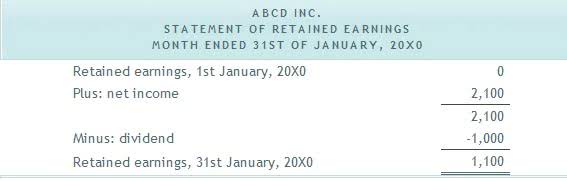
- Sara wants to know the amounts of depreciation expense and asset value she needs to show in her financial statements prepared on 31 December each year if the double-declining method is used.
Declining Balance Method of Depreciation Explained in Video
This results in depreciation being the highest in the first year of ownership and declining over time. Hence, our calculation of the depreciation expense in Year 5 – the final year of our fixed asset’s useful life – differs from the prior periods. Bottom line—calculating depreciation with the double declining balance method is more complicated than using straight line depreciation. And if it’s your first time filing with this method, you may want to talk to an accountant to make sure you don’t make any costly mistakes. On the other hand, with the double declining balance depreciation method, you write off a large depreciation expense in the early years, right after you’ve purchased an asset, and less each year after that. With the double declining balance method, you depreciate less and less of an asset’s value over time.
When you purchase an asset that you expect to use in your business for more than one year, financial accounting principles require you to depreciate, or expense, part of the cost over a number of years. In certain cases businesses do use double declining balance method of depreciation to attribute cost of property, plant and equipment to expenses. DDD is so named because the annual assets = liabilities + equity depreciation rate is exactly double the standard straight-line rate.

Double declining balance depreciation allows for higher depreciation expenses in early years and lower expenses as an asset nears the end of its life. Depreciation is the required accounting process of systematically allocating the cost of a tangible asset over its estimated useful life. This cost allocation is not a cash expense but rather a mechanism for matching the asset’s expense with the revenue it generates over its service period. The Double Declining Balance (DDB) method is one specific, accelerated approach to this allocation. Firstly, the DDB method influences the income statement by spreading the depreciation expense over the asset’s useful life.
Comparison of MACRS and Double Declining Balance Methods

Many types of property—like vehicles, computers and manufacturing equipment—decline faster in the early years. Not only does DDB align with this reality, but it can also help generate savings during growth phases by maximizing deductions. Suppose you purchase an asset for your business for $575,000 and you expect it to have a life of 10 years with a final salvage value of $5,000. You also want less than 200% of Partnership Accounting the straight-line depreciation (double-declining) at 150% or a factor of 1.5. There are four different depreciation methods used today, and I discuss these in the last section of my Beginner’s Guide to Depreciation. The above image doesn’t a much better job of explaining switching depreciation methods than mere words alone.